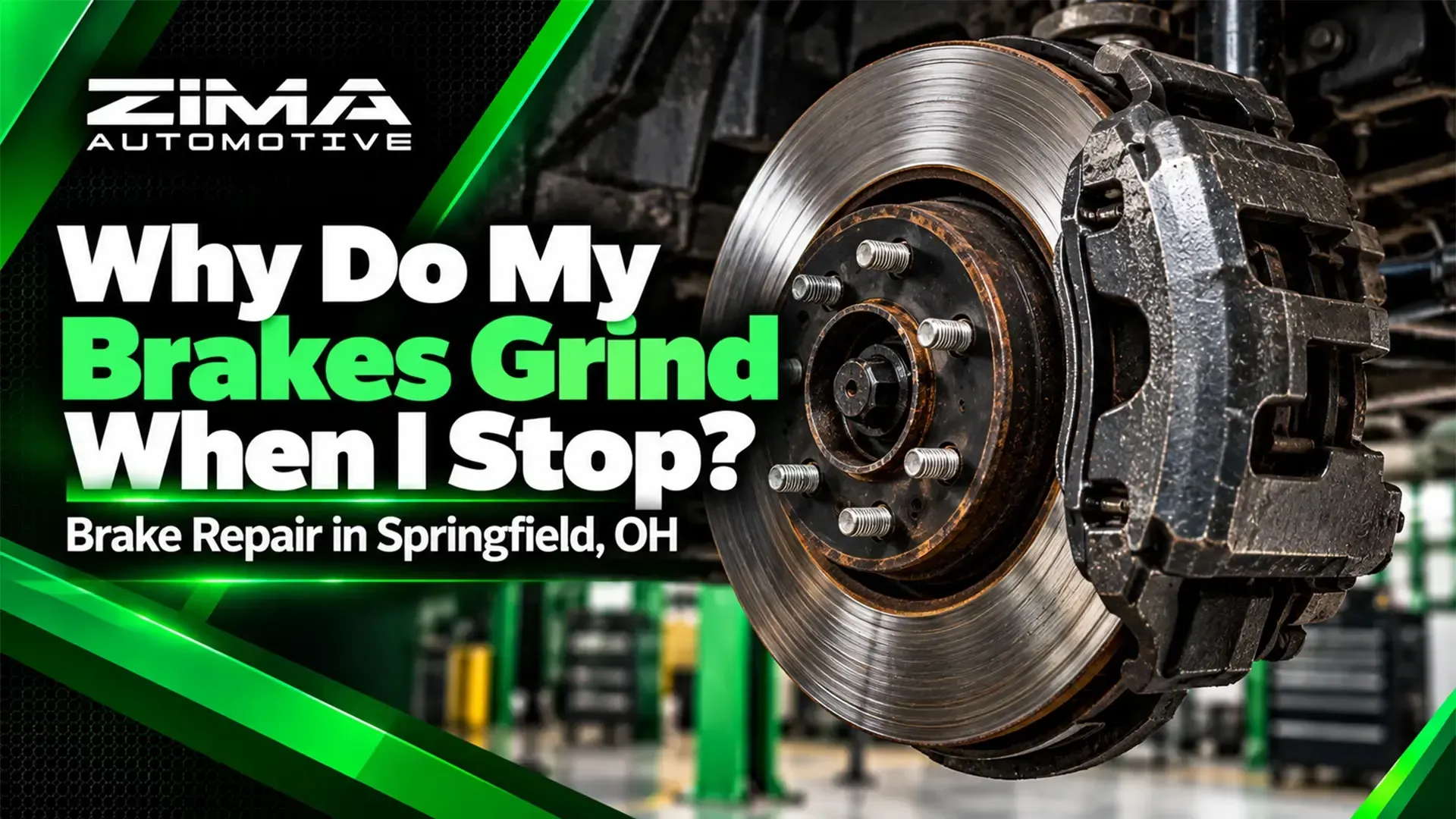
Brakes grinding when stopping usually mean metal parts are contacting each other because friction material has worn away or a component is not moving correctly. The sound can also come from debris or surface rust, but a harsh, repeated grind deserves prompt attention.
Our
brake repair in Springfield, OH, starts with an inspection of the pads, rotors, calipers, and related hardware. We use the inspection findings to determine what needs attention before recommending any repairs.
What Grinding Brakes Usually Mean
A grinding noise when braking most often means the brake pads have worn too thin to cushion contact with the rotors. The metal backing plate may scrape the rotor each time you press the pedal. That contact can reduce smooth stopping and create more damage with every trip.
Some noises have less serious causes. Light scraping after a car sits in the rain may come from a thin layer of rotor rust. A small stone can also become trapped near a dust shield. If the sound continues after a few normal stops, gets louder, or comes with a change in pedal feel, the system needs inspection.
Common Causes of a Grinding Noise When Braking
Grinding begins when two surfaces meet in a way the brake system did not intend. The timing, location, and feel of the noise help narrow the cause, but the wheel must often come off for a clear answer.
Worn Brake Pads
Worn brake pads are the most common reason for a steady metal-on-metal grind during a stop. Pads use friction material to press against the rotor. Once that layer is gone, the backing plate can score the rotor and raise repair costs.
A wear indicator often produces a high-pitched squeal before grinding begins, but not every driver hears it. Road noise, closed windows, or uneven pad wear can hide the warning until the sound becomes harsher.
Grooved or Damaged Brake Rotors
Brake rotor damage can cause grinding, pulsing, or vibration when the rotor surface becomes deeply scored or uneven. Heat and metal contact may cut grooves into the disc. A technician must measure rotor thickness and inspect its condition to determine whether resurfacing is appropriate or replacement is needed.
If the steering wheel shakes or the car pulls while stopping, related tire, steering, or suspension wear may also be involved. Our suspension and steering repair covers those connected handling concerns when an inspection points beyond the brake system.
Sticking Calipers or Brake Hardware
A sticking caliper can keep one pad pressed against the rotor after you release the pedal. This creates heat, rapid uneven wear, a hot smell, or a pull to one side. Frozen slide pins, damaged clips, or a failing caliper piston can produce similar symptoms.
The repair should address the part that caused the uneven contact, not only the pad that wore down. Replacing pads without correcting a sticking component can allow the same problem to return.
Rust, Debris, or Moisture
Surface rust can make a brief scraping sound after rain, washing, or an overnight temperature change. It often clears after several gentle stops. A pebble near the rotor or a bent dust shield can also create a scraping noise that changes with wheel speed.
Persistent grinding still needs a close look. Older vehicles may have added corrosion around brake hardware and lines, especially after years of Ohio winter exposure. Our shop also services older models such as Suzuki vehicles. Learn more through our Suzuki auto repair in Springfield, OH, page, which addresses brake concerns such as soft pedals, grinding, and ABS warnings.
Can I Drive With Grinding Brakes?
Driving with grinding brakes is risky because stopping performance may already be reduced. If the pedal is soft, the car pulls hard, or stopping distance increases, park safely and arrange a tow. Do the same if a warning light appears or the noise is severe. Do not keep driving to test whether the sound will disappear.
If the noise is light and appears only after rain, a few slow stops in a safe area may clear surface rust. Stop driving if it remains. Ohio law requires vehicle brakes to be maintained in good working order. The Ohio brake equipment requirements describe the stopping and maintenance standards for vehicles on public roads.
Why Springfield Driving Conditions Matter
Springfield driving can speed up brake wear through frequent stops, seasonal moisture, and winter road treatment. Stop-and-go trips near downtown, Route 68, and US-40 repeatedly heat the pads and rotors. I-70 commuting adds higher-speed braking when traffic slows quickly.
Road salt and slush can also promote corrosion around caliper hardware, brake lines, and rotor surfaces. Freeze-thaw potholes may add vibration or handling symptoms that feel worse during braking. Our recent guide on getting clear answers about brake repair explains how communication can make the process easier to understand for drivers uneasy about a repair visit.
What Our Brake Inspection Checks
A brake inspection should identify both the damaged part and the reason it failed. At Zima Automotive, we check pad thickness, rotor condition, caliper movement, hardware, hoses, lines, fluid condition, and visible leaks. We also compare wear from side to side and look for heat or corrosion that points to a sticking component.
The findings determine the repair plan. Some vehicles need pads, while others also need rotor service, caliper work, or attention to related steering and suspension parts. Photos and clear explanations help you understand what needs attention now and what can wait. You can request a service appointment after reviewing the next step that fits your vehicle.
Takeaways
Grinding while stopping often means worn brake pads have allowed metal to contact the rotors. Caliper trouble, damaged hardware, rust, or trapped debris can also create the sound, so inspection is more reliable than guessing from noise alone.
Limit driving if the grinding continues, and stop immediately when braking feels weak, uneven, or less responsive. Prompt brake repair in Springfield, OH, can help identify the cause before added heat and friction damage more parts.
Frequently Asked Questions
Why do my brakes grind only at low speeds?
Brakes may grind only at low speeds because light pedal pressure makes pad, rotor, or hardware contact easier to hear. Worn pads, a rotor groove, loose hardware, or debris may still be present even when the noise fades at higher speeds.
Can new brake pads make a grinding noise?
New brake pads should not produce a harsh, ongoing grind. A short bedding-in sound may be normal, but incorrect installation, contaminated surfaces, damaged rotors, or a sticking caliper should be checked if grinding continues.
How long can I drive with grinding brakes?
You should not plan to keep driving with grinding brakes. Limit movement to reaching a safe place and arrange an inspection or tow if the sound continues or stopping feels different.
Does grinding always mean I need new rotors?
Grinding does not always mean the rotors need replacement. A technician must inspect rotor surfaces and measure thickness to determine if service is needed. Light rust or debris may clear, but deep scoring, excess wear, or heat damage may require rotor service.
Can road salt make brake grinding worse?
Road salt can make brake grinding worse by encouraging corrosion on rotors, caliper hardware, and other exposed parts. Rinsing road salt from the vehicle helps, but persistent noise still requires an inspection.
Schedule Brake Repair in Springfield, OH
Grinding is your brake system asking for attention, and an inspection can show whether the cause is worn pads, rotor damage, a sticking caliper, or something simpler. Contact Zima Automotive to schedule a brake check before continued driving adds more wear.
Call
(937) 342-3911 or visit us at
4800 Urbana Rd, Springfield, OH 45502 for a clear explanation of what your vehicle needs.