When your car is stuck in one gear, it usually points to a shifting problem that should not be simply ignored. Sometimes the issue is as simple as low fluid or a sensor fault. Other times, the vehicle may be protecting itself from further damage by limiting how it shifts.
South Texas heat and humidity can accelerate sensor degradation and wiring corrosion. A marginal component may pass briefly after codes are cleared, then fail again under normal operating load. Zima Automotive helps drivers get clear answers through practical testing, drivability checks, and transmission-related repair support before the problem spreads.
Why a Car Stuck in One Gear Needs Prompt Attention
A transmission problem can feel confusing because the vehicle may still move. That does not imply that it is safe to keep driving normally.
A car that is stuck in one gear may rev higher than usual, accelerate poorly, shift harshly, or feel like it has lost power. If the vehicle is in a protective mode, forcing it to drive longer can create extra heat and strain. A car not shifting gears properly is not just inconvenient. It can affect safety, fuel use, and long-term repair cost.
Common Causes of a Car Stuck in One Gear
Several systems help modern vehicles decide when and how to shift. The right fix depends on what testing shows.
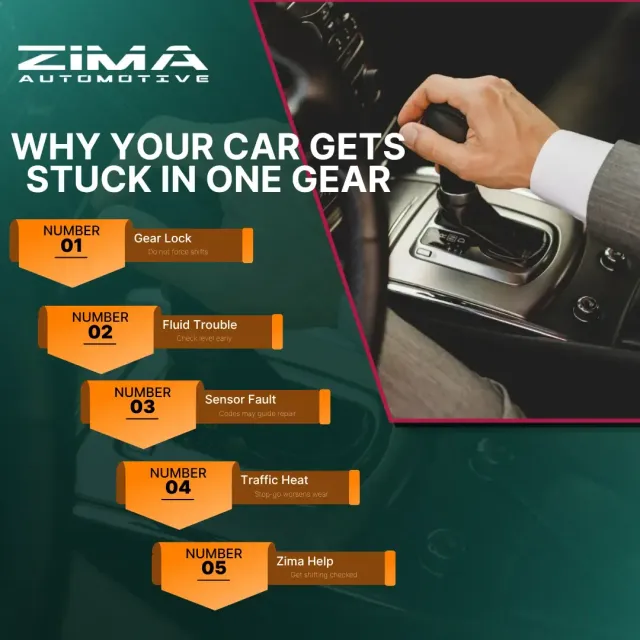
Low or contaminated transmission fluid
Transmission fluid helps create hydraulic pressure, reduce heat, and protect internal parts. If the fluid is low, old, burnt, or contaminated, the transmission may shift late, slip, or get stuck in one range. If fluid maintenance is overdue, Zima’s fluid flush guide can help explain why transmission, brake, and coolant fluids matter.
Transmission control or sensor problems
Modern transmissions rely on sensors, wiring, and control modules. A bad speed sensor, wiring issue, or communication problem may cause poor shift timing. In some cases, auto electrical repair is part of solving the issue because the transmission may be reacting to missing or incorrect signals.
Limp mode protecting the vehicle
The vehicle's limping mode is designed to reduce damage when it detects a serious issue. The car may stay in one gear, limit acceleration, or feel sluggish. This is where thorough transmission diagnostics matter. A scan alone may not tell the whole story, but it can point the technician toward fluid, electrical, control, or internal transmission concerns.
Manual transmission or clutch trouble
If you drive a manual vehicle, a worn clutch, linkage issue, or hydraulic problem can make gear changes difficult or impossible. If the shifter feels stuck, the clutch pedal feels different, or the vehicle grinds when changing gears, clutch repair may be the more relevant starting point than a full transmission repair.
What to Do If Your Car Gets Stuck in Gear
Start by paying attention to how the vehicle behaves. Note whether the problem happened suddenly, only when cold, after highway driving, in stop-and-go traffic, or after a warning light came on.
Avoid forcing the shifter or pushing the vehicle hard. If it feels unsafe, pull over when you can do so safely. If the car is stuck in gear while driving and the engine is revving high, it is safer to stop and arrange help. The same applies if the vehicle is jerking or you smell something hot. Continuing to drive could risk a larger failure.
For local help, Zima Automotive offers transmission repair in Springfield, OH focused on finding the actual cause.
How Springfield Driving Can Make Shifting Problems Worse
Transmission problems often show up faster under heat and load. Springfield driving can create both.
Short trips around Clark County may not let fluids reach stable operating conditions. Stop-and-go traffic on US-40, Limestone Street, and busy commuter routes can build heat. Longer drives on I-70 or Route 68 can expose slipping, delayed shifts, or sensor-related problems once the vehicle is under steady demand. Work trucks, older sedans, and family SUVs that log high daily mileage may show symptoms sooner when maintenance has been delayed.
If the check engine light, drivability problems, or shifting trouble appear together, engine diagnostics and repair can help separate engine performance issues from transmission concerns.
Takeaways
A vehicle that stays in one gear is usually warning you that something in the transmission, clutch, fluid system, or vehicle controls needs attention. Driving longer may make heat, wear, and repair costs worse, especially if the vehicle is already in limp mode.
The safest move is to avoid forcing the issue and get a proper inspection. Clear testing can show whether the problem is minor, maintenance-related, electrical, or a deeper transmission concern.
Frequently Asked Questions
Is it safe to drive when my car is stuck in one gear?
It depends on how the vehicle feels, but it is not something to ignore. If the engine is revving too high, the car has poor acceleration, or you feel harsh engagement, continuing to drive can increase heat and damage. A short, careful drive to a repair shop may be possible in mild cases, but towing is safer if the vehicle feels unstable or overheated.
Why will my automatic car not shift out of gear?
An automatic car may not shift because of low fluid, contaminated fluid, a failed sensor, wiring trouble, a control module issue, or internal transmission wear. Some vehicles also enter limp mode when the computer detects a problem that could cause damage. Proper testing helps narrow the issue instead of replacing parts based on symptoms alone.
Can low transmission fluid cause this problem?
Yes, low transmission fluid can reduce hydraulic pressure and make shifting unpredictable. It can also allow extra heat and friction, which may make the vehicle slip, hesitate, or stay in one gear. If the fluid is low, the next step is finding out whether it is due to a leak, overdue service, or another problem.
Does being stuck in one gear always mean I need a new transmission?
No, a vehicle stuck in one gear does not automatically indicate that the transmission needs replacement. Some causes are related to fluid condition, sensors, electrical faults, linkage concerns, or software-related protection modes. The repair path depends on test results, driving symptoms, and the condition of the transmission fluid and related systems.
Should I schedule diagnostics or transmission repair first?
Start with diagnostics when the cause is not obvious. A good inspection can check codes, fluid condition, leaks, shift behavior, and related electrical inputs. From there, the shop can explain whether the issue calls for service, repair, electrical testing, clutch work, or deeper transmission attention.
Get Gear and Transmission Help from Zima Automotive
If you need auto repair in Springfield, OH, for a vehicle that will not shift correctly, Zima Automotive can help. The team can sort out what is happening before the problem gets worse. Our team serves drivers from Springfield, Urbana, Mechanicsburg, Enon, and surrounding Clark County communities with clear explanations and practical repair guidance.
Call (937) 342-3911 or visit 4800 Urbana Rd, Springfield, OH 45502 to schedule service. If your car is stuck in one gear due to fluid, electronics, clutch wear, or a transmission fault, have it checked now. Early diagnosis can help protect the vehicle and prevent a small shifting issue from turning into a larger repair.