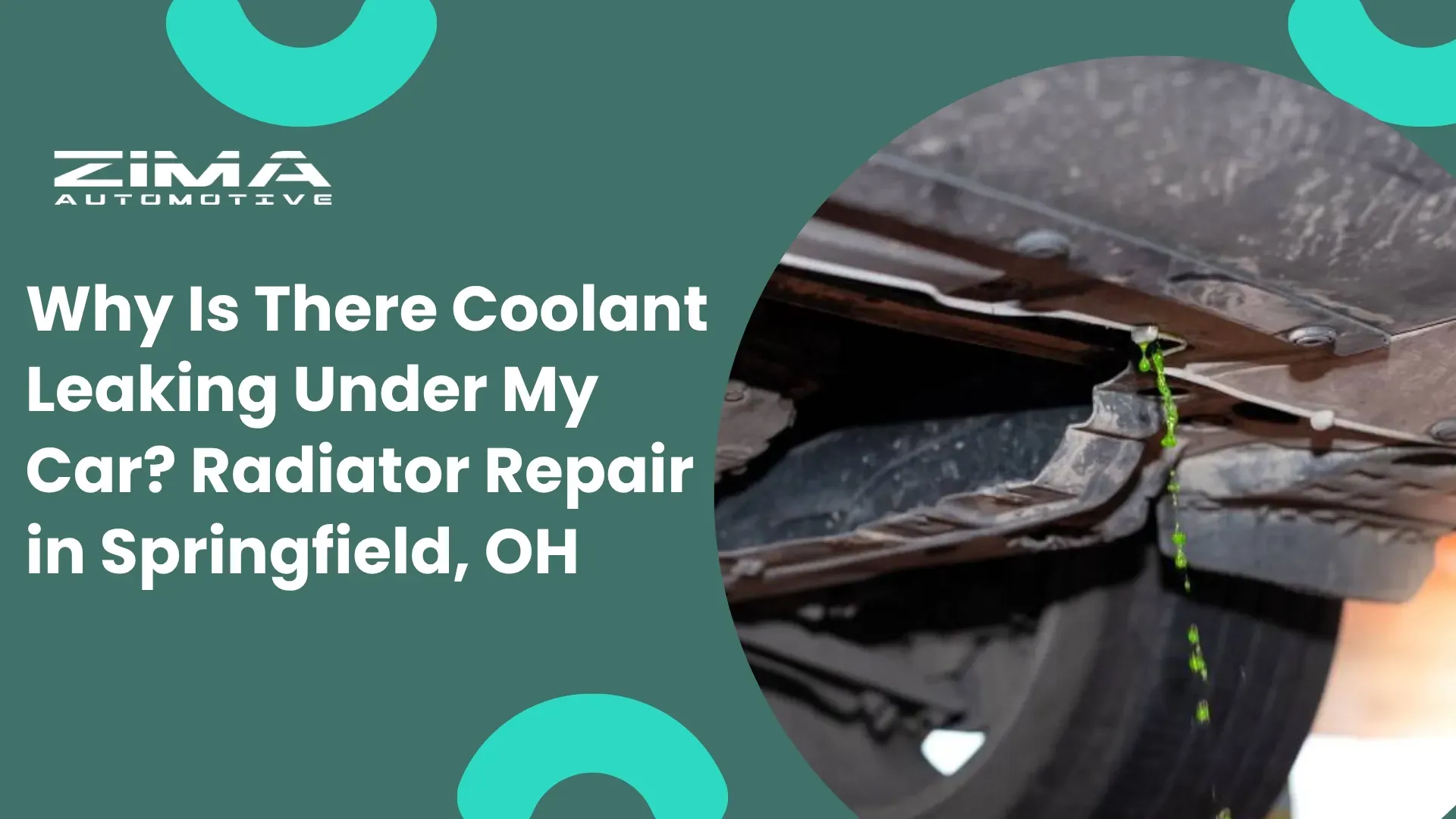
A small puddle under your vehicle can quickly become a concern. That is especially true when you rely on the car for work, errands, school drop-off, or driving around Springfield. If the thought in your head is, “Why is there coolant leaking under my car?” the safest answer is to take it seriously. Coolant leaks can start with a hose, radiator, cap, or water pump issue, but they can easily lead to overheating if the system can no longer hold pressure.
Zima Automotive helps local drivers with radiator replacement in Springfield, OH and cooling system concerns before a manageable leak turns into engine damage.
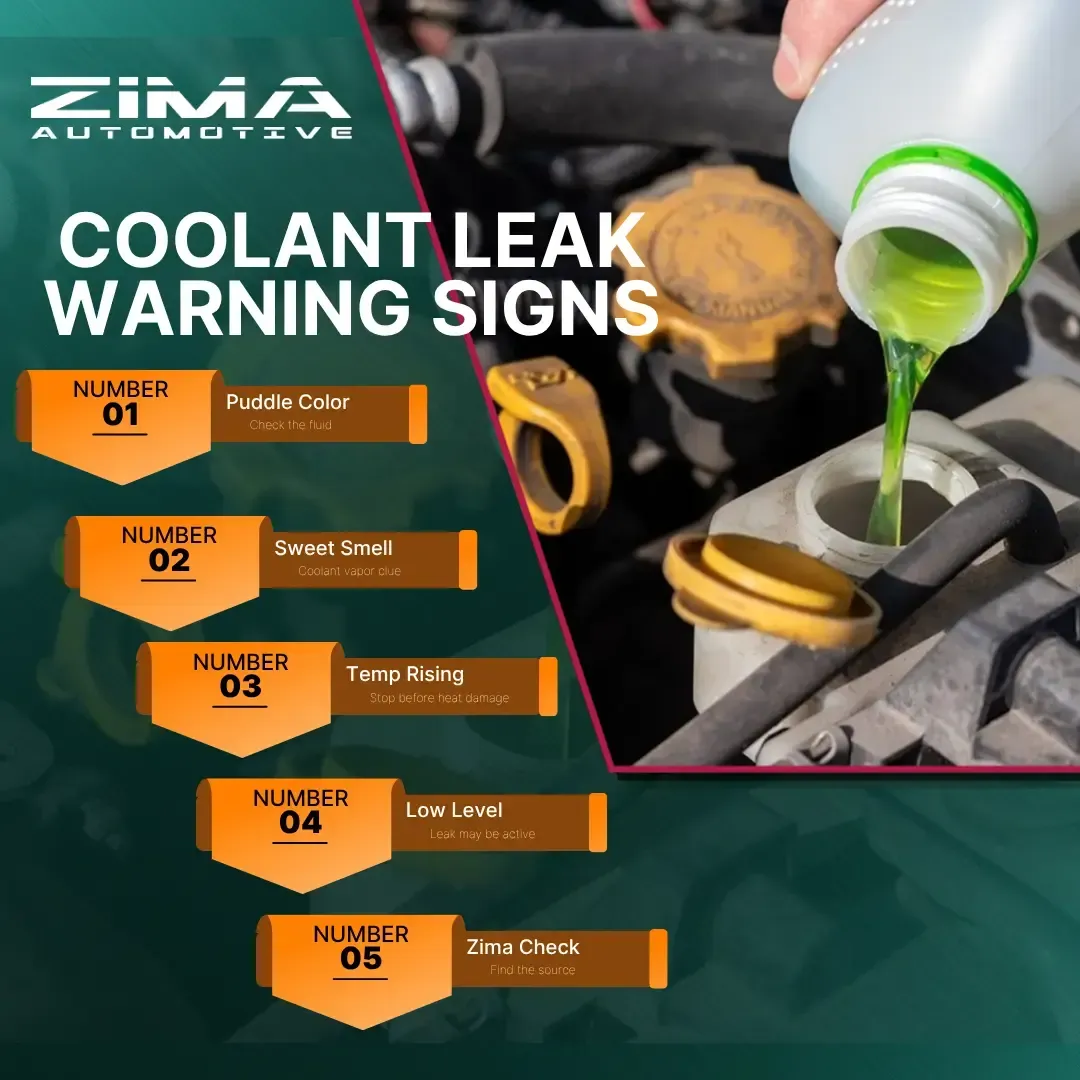
Why Is Coolant Leaking Under My Car?
Coolant is supposed to stay sealed inside the cooling system while it moves heat away from the engine. Once you see fluid under the vehicle, smell something sweet, or notice the temperature gauge climbing, the system needs attention.
Radiator leaks and cracked plastic tanks
Radiators deal with heat, pressure, road vibration, and age. Over time, metal cores can corrode, seams can weaken, and plastic tanks can crack. If the leak appears near the front of the vehicle, especially after driving, the radiator may be the source.
Hoses, clamps, and water pump leaks
A coolant leak does not always imply that the radiator itself has failed. Rubber hoses can soften, clamps can loosen, and a worn water pump can leak around the seal. These problems are common on higher-mileage vehicles and work vehicles that are used daily around Clark County.
Pressure cap or overflow issues
The cooling system relies on pressure to raise the boiling point of coolant. A weak cap can allow coolant to escape into the overflow area or push out after the engine gets hot. That can look like a leak even when the radiator is not cracked.
Why Coolant Leaks Need Attention on Springfield Roads
A coolant leak can seem minor when the car still starts and drives. The risk is that cooling problems worsen while you are driving, not when the vehicle is parked safely at home.
Heat, traffic, and older vehicles
Springfield drivers see a mix of humid Ohio summers, cold starts in winter, and stop-and-go traffic near town. Add I-70, Route 68, US-40, and daily work commutes, and your cooling system has to perform reliably under different loads. A coolant leak combined with overheating is more urgent than a simple puddle because overheating can damage gaskets, sensors, and internal engine parts.
Local driving can make small leaks worse
Short trips, idling, rural-road miles, and older vehicles can all make coolant issues harder to ignore. A leak that only drips a little in the driveway may lose more coolant once the engine heats up and pressure builds. For radiator repair in Springfield, OH, a quick patch is not sufficient. The leak needs to be traced before low coolant leads to overheating, engine damage, or a breakdown during your normal drive.
What to Check Before You Drive Again
You do not need to diagnose the whole cooling system yourself. A few safe observations can help you decide whether the vehicle should be driven, parked, or inspected right away.
Look at the puddle location and coolant color
Coolant is often green, orange, pink, yellow, or blue, depending on the vehicle. It may feel slick and have a sweet smell. Puddles near the front center of the vehicle may point toward the radiator area. Drips farther back may come from hoses, heater lines, or other cooling system parts.
Watch the temperature gauge
If the temperature gauge rises above normal or the warning light comes on, stop driving as soon as it is safe. The same applies if you see steam coming from under the hood. Continuing to drive an overheating engine can turn a cooling system repair into a much larger engine repair. If warning lights or rough running appear with the leak, engine diagnostics and repair can help identify related issues.
Do not open a hot cooling system
Never remove the radiator cap or coolant reservoir cap while the engine is hot. The system can be under pressure, and hot coolant can spray out. Let the vehicle cool fully before checking levels, and avoid topping off repeatedly without finding the cause. If the cooling fan is not coming on, or the issue seems electrical, Zima Automotive also handles auto electrical repair that may connect to fan control, sensors, or wiring.
When Radiator Repair or Replacement Makes Sense
A cooling system should be tested before anyone assumes the radiator is the problem. The right repair depends on where the leak starts, how much coolant is being lost, and whether overheating has already happened.
Testing should come before parts replacement
A good inspection may include a pressure test, visual leak check, coolant level check, hose inspection, and cap test. The technician may also inspect the radiator, thermostat, water pump, and cooling fans. This helps separate a simple coolant leak repair from a larger cooling system problem. It also helps you avoid replacing the wrong part.
Replacement may be safer than patching
Some leaks can be repaired, but a weak radiator may not be worth patching if corrosion, cracking, or repeated overheating is already present. In those cases, radiator replacement in Springfield, OH may be the better long-term fix. If the repair cost is a concern right now, Zima Automotive offers financing options that can help drivers make a clear decision without delaying a needed repair too long.
For maintenance-minded drivers, Zima also has a guide on Radiator Maintenance 101 that covers simple habits that help the cooling system stay ahead of heat-related problems.
Takeaways
Coolant leaks should not be ignored just because the vehicle still runs. A puddle can come from the radiator, hose, cap, water pump, or another cooling system part. The real concern is what happens once the engine heats up under pressure.
Springfield drivers depend on reliable vehicles for work, family, and daily miles. Getting the leak checked as soon as possible can help you avoid overheating, protect the engine, and make a repair decision before the problem spreads.
Frequently Asked Questions
Can I drive with coolant leaking under my car?
It depends on how much coolant is leaking and whether the engine is overheating. If the temperature gauge is rising or the coolant warning light is on, it is safer to stop driving. The same applies if steam is coming from under the hood. Get help before the issue causes more damage.
What color is coolant when it leaks?
Coolant can be green, orange, pink, yellow, blue, or another color depending on the vehicle and coolant type. If the fluid smells sweet, feels slick, or appears near the front of the vehicle after driving, it may be coolant. That is different from water that normally drips from the A/C system.
Is a coolant leak the same as a radiator leak?
A coolant leak is not always the same as a radiator leak. A radiator leak is one possible source, but coolant can also leak from hoses, clamps, the water pump, thermostat housing, heater core lines, or the overflow system.
Why does my car only leak coolant after driving?
Coolant leaks often show up after driving because heat and pressure build inside the cooling system. A small crack, weak hose, or bad cap may not leak much when the engine is cold, but it can release coolant once the system gets hot.
How soon should I schedule coolant leak repair?
Schedule service as soon as you notice repeated coolant loss, a visible puddle, a sweet smell, or temperature changes. Waiting can increase the risk of overheating and may lead to more expensive engine-related repairs.
Get Coolant Leak and Radiator Help from Zima Automotive
If you came here searching for why coolant is leaking under your car, Zima Automotive can help you find the source and decide what needs attention now. Our team focuses on practical answers, clear inspections, and repair recommendations that make sense for your vehicle and your budget.
For coolant leak repair, radiator service, or cooling system concerns, visit our auto shop at 4800 Urbana Rd, Springfield, OH 45502, or call (937) 342-3911 to schedule service. A small leak is easier to deal with before it becomes an overheated engine on the side of the road.