A low oil pressure warning means the engine may not be circulating enough oil for protection. A low oil level warning means the engine may not contain enough oil. Because lost pressure can cause rapid damage, pull over safely and shut off the engine when a red pressure warning stays on.
Our engine diagnostic service helps identify whether the problem involves oil supply, a sensor, or internal wear.
Low Oil Pressure Warning vs. Low Oil Level Warning
The difference is circulation versus quantity. Your engine needs enough oil and pressure to protect internal parts.
What a Low Oil Pressure Warning Means
A low oil pressure warning indicates that measured pressure is below the range the vehicle expects. The symbol often looks like a red oil can and may appear with new engine noise.
Very low oil can reduce pressure. A restricted pickup, weak pump, worn bearings, incorrect viscosity, clogged filter, or faulty sensor may also trigger the oil pressure light.
What a Low Oil Level Warning Means
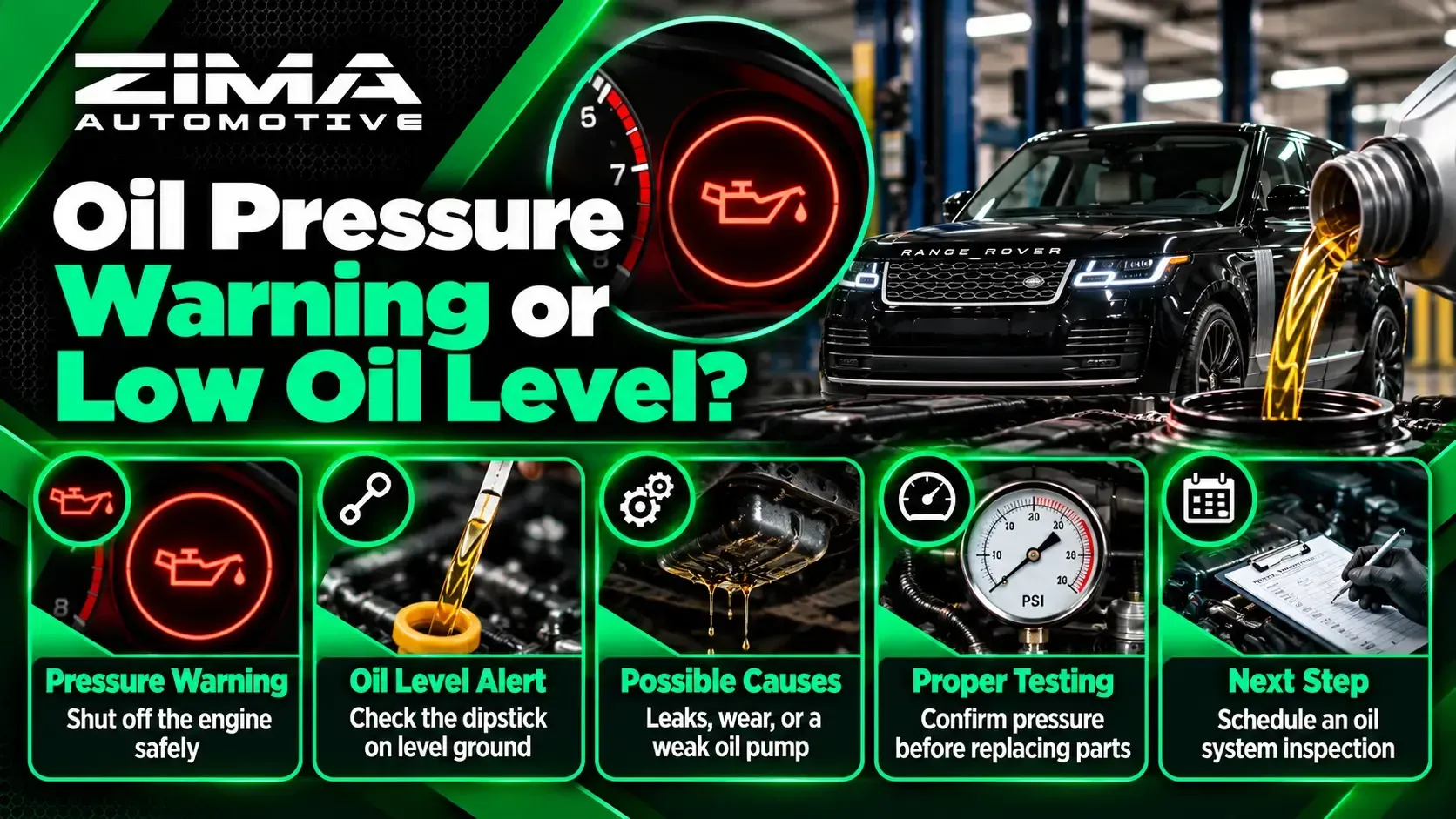
A low oil level warning indicates that the amount of oil has dropped below a monitored point. Some vehicles show a yellow symbol or add-oil message, while others rely on a dipstick. Low oil level can come from a leak, consumption, or an incorrect fill. It needs attention, but the response differs from a pressure warning.
What to Do When an Oil Warning Appears
Your response should depend on the warning and the engine's behavior. Check the owner's manual because dashboard symbols vary by vehicle.
Responding to a Red Pressure Warning
If a red pressure warning stays on, park safely and turn off the engine. Do not continue along I-70, US-40, or Route 68 to see whether it clears. Poor lubrication can damage internal parts quickly.
After the engine rests, look for a major leak. Do not restart it if the dipstick shows no oil or the engine made a ticking or knocking sound.
Checking a Low Oil Level Safely
For a level warning without abnormal noise, park on level ground and wait as directed by the owner's manual. Wipe and reinsert the dipstick before reading it. Add the specified oil in small amounts without overfilling.
A top-off does not explain where the oil went. Our oil change service can establish the correct oil and fill level while checking for leaks. Home mechanics should follow Ohio EPA used-oil guidance for recycling drained oil.
Why Engine Oil Pressure Drops
Oil pressure falls when the system cannot supply the required flow. Adding oil cannot repair every cause.
Low Oil Supply or the Wrong Oil
When the level falls far enough, the pump may draw air. Thin or fuel-diluted oil may lose pressure when hot. A restricted filter can also affect flow.
Wind can spread leaking oil and hide its source. Our article about finding an oil spot under your car explains clues such as color, location, and odor.
Pump, Pickup, Filter, or Sensor Problems
The pump creates flow, the pickup draws from the pan, and a sensor reports pressure. Wear, restriction, wiring damage, or sensor failure can create similar warnings. Replacing the sensor without testing pressure can miss a mechanical fault.
Internal Engine Wear
Engine bearings need controlled clearances to maintain an oil film. Mileage, overheating, or earlier low-oil operation can enlarge those clearances and reduce pressure after warm-up. We service domestic, Asian, and European vehicles, including Chevrolet repair and maintenance for cars, SUVs, and trucks.
How We Diagnose Oil Pressure Concerns
Diagnosis separates an inaccurate warning from a lubrication problem. We start with basic checks, then test further when needed.
Establishing the Oil Level and Service Baseline
We check the oil level, condition, viscosity, filter, service history, and leak areas. Fuel dilution, contamination, sludge, or metal debris can change the next step.
Testing Actual Oil Pressure
A technician may use a mechanical gauge to compare actual pressure with specifications. Scan data and electrical tests can then evaluate the sensor and circuit.
Finding the Cause Before Recommending Repairs
The repair may involve correcting the level, repairing a leak, replacing a sensor, clearing a restriction, servicing the pump, or evaluating internal wear. Testing first avoids unrelated parts replacement.
Springfield Driving Conditions and Oil System Stress
Cold Ohio starts can slow oil flow before warm-up, while summer heat can thin hot oil. Short Clark County trips may leave moisture or fuel in the crankcase. A persistent warning is never normal.
Note whether the warning appears at cold start, hot idle, during turns, under braking, or at highway speed. For drivers seeking engine repair in Springfield, OH, that pattern can help us choose the correct test.
Takeaways
A low oil pressure warning concerns oil circulation and may require an immediate shutdown. A low oil level warning concerns quantity and calls for a correct level check, the specified oil, and attention to the reason for the loss.
Adding oil does not repair every pressure problem. If the warning stays on, returns, or comes with noise or leakage, testing should confirm actual pressure and identify the cause.
Frequently Asked Questions
Can low oil level cause low oil pressure?
Yes, a very low oil level can cause low oil pressure when the pump cannot draw a steady supply from the oil pan. Low pressure can also have other causes, so topping off the oil does not prove that the problem is solved.
Can I drive with the oil pressure light on?
No, you should not keep driving with a red oil pressure light that remains on while the engine runs. Pull over safely, shut off the engine, and arrange an inspection or tow if the warning persists.
Why does the oil pressure warning appear at idle?
The warning may appear because pressure is naturally lower at idle, revealing thin oil, pump wear, bearing wear, or a sensor problem. Actual pressure should be compared with the manufacturer's hot-idle specification.
Will adding oil turn off the oil pressure warning?
Yes, adding oil may turn off the warning if the level was low enough to interrupt the pump's supply. It will not correct a failed sensor, restricted pickup, weak pump, incorrect oil, or internal engine wear.
How is low oil pressure diagnosed?
Low oil pressure is diagnosed by checking oil level and condition, looking for leaks, and measuring actual pressure when needed. Electrical tests and scan data can show whether the sensor or circuit is reporting accurately.
Schedule Oil Pressure Testing in Springfield, OH
If a low oil pressure warning remains on, shut off the engine and contact Zima Automotive before driving farther. We can measure pressure and explain whether maintenance, leak correction, sensor repair, or deeper engine work makes sense.
Call (937) 342-3911 to discuss the warning or schedule a visit. Our shop is located at 4800 Urbana Rd, Springfield, OH 45502, with convenient access for drivers across Springfield and Clark County.