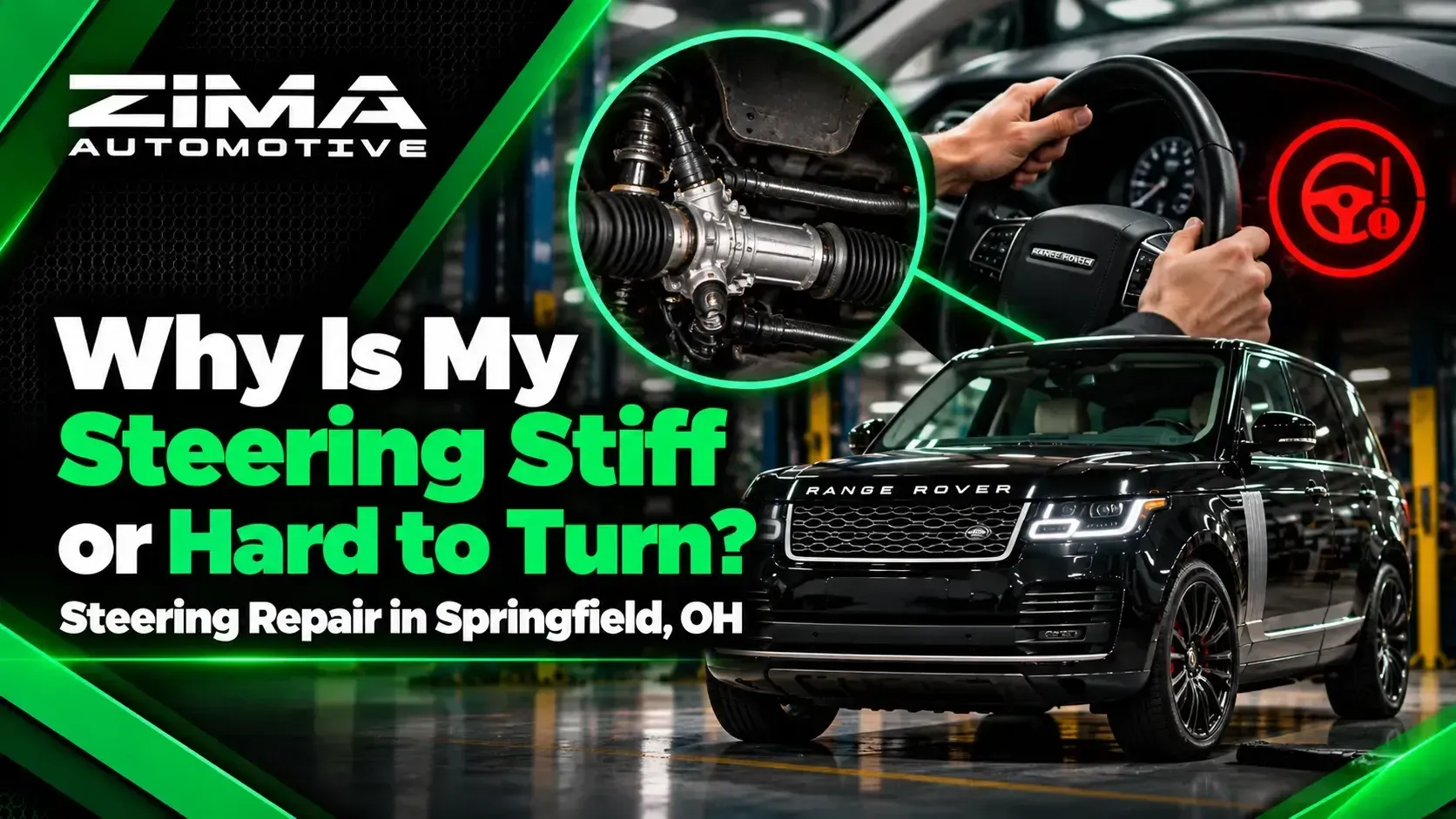
Stiff steering usually means the steering assist is weak, a tire is low, or a steering or suspension part is binding. The change may be most obvious while parking or making a tight turn. At Zima Automotive, we provide suspension and steering repair in Springfield, OH, for drivers who need the cause identified before parts are replaced.
If you find the steering hard to turn, do not assume the vehicle only needs more fluid. Hydraulic and electric systems fail differently, while some causes can affect control.
What Does Stiff Steering Mean?
Stiff steering means the wheel takes more effort to move than it normally does. The problem can affect both directions, one direction, or only certain speeds and temperatures.
The pattern gives a technician useful clues. Heavy steering at idle may point toward weak hydraulic assist. A wheel that catches or will not return smoothly can indicate a binding part.
Why Is My Steering Hard to Turn?
Steering becomes hard to turn when the system loses assist or when tires and mechanical parts resist movement. The exact cause depends on whether the vehicle uses hydraulic, electro-hydraulic, or fully electric power steering.
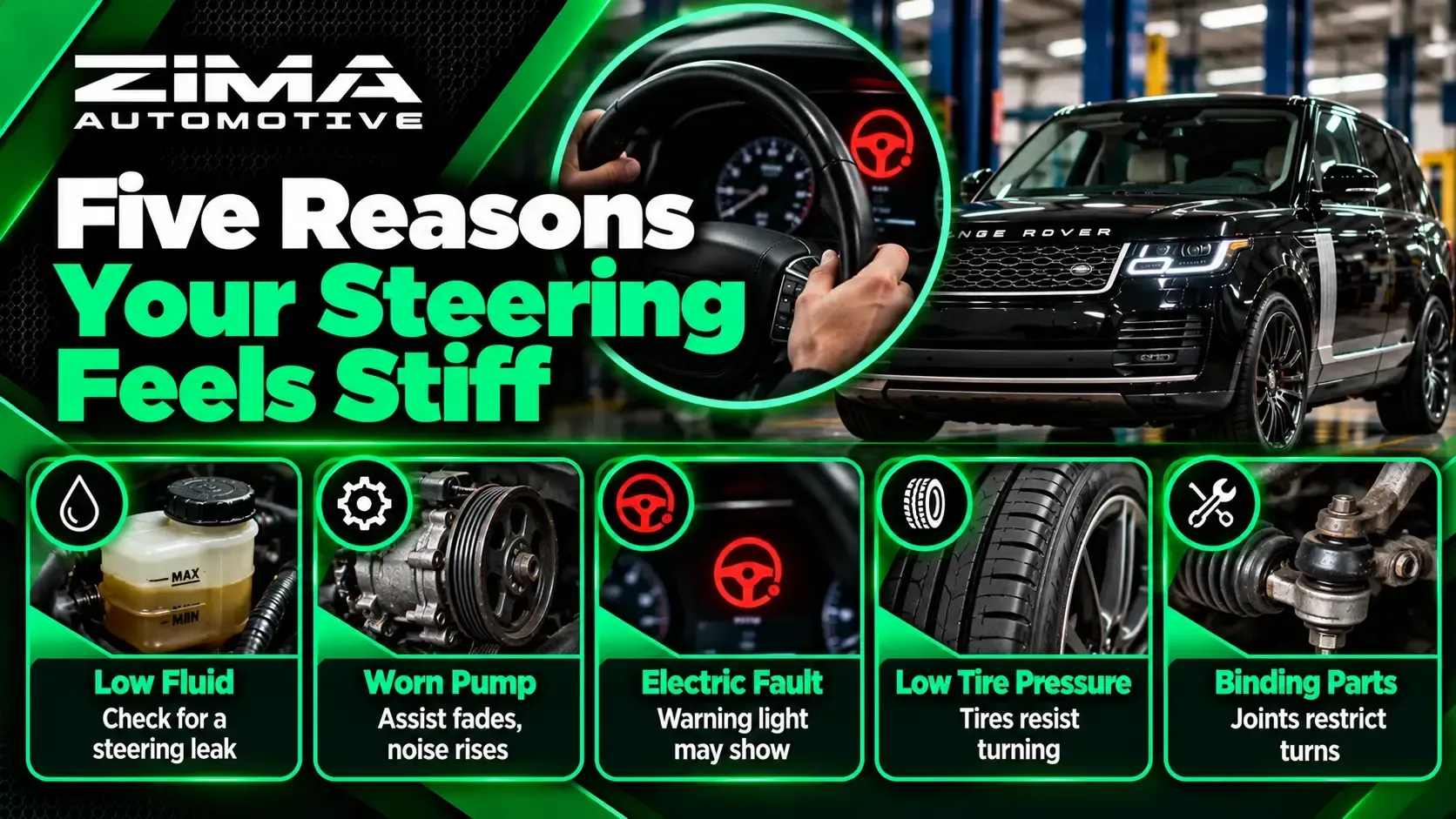
Low Power Steering Fluid or a Leak
Low fluid can reduce hydraulic pressure and make the wheel feel heavy, especially during slow turns. You may also hear whining or groaning from under the hood.
Hydraulic power steering fluid does not normally disappear through routine use. A low level often means fluid is escaping from a hose, seal, pump, or steering rack. Adding the correct fluid may restore assist briefly, but it does not repair the leak.
A Worn Pump or Drive Belt
A weak power steering pump may not create enough pressure to assist the driver. The steering can feel worse at parking-lot speeds, and pump noise may rise as the wheel turns.
Some hydraulic pumps are driven by a belt. A loose, worn, or contaminated belt can slip and reduce pump speed. A proper power steering repair begins by checking the pump, belt, fluid condition, and related connections instead of replacing one part based on noise alone.
Electric Power Steering Faults
Electric power steering can become heavy when a motor, torque sensor, wiring circuit, control module, or charging-system issue interrupts assist. A steering warning light may appear, although some intermittent faults occur without a constant light.
Battery voltage also matters because electric steering motors draw substantial current during low-speed turns. Our repair and maintenance services use system checks to separate steering faults from related electrical concerns.
Low Tire Pressure or Tire Problems
Low front-tire pressure increases rolling resistance and can make steering effort feel heavier. A damaged tire, mismatched tires, or severe tread wear may also change how the wheel responds.
Check all tires against the pressure listed on the vehicle placard, not the maximum printed on the tire sidewall. If the car also pulls or wears tread unevenly, a tire rotation and alignment check can separate tire and alignment concerns from an assist fault.
Binding Steering or Suspension Parts
Worn or seized joints can resist movement even when the power assist works. Possible sources include tie-rod ends, ball joints, steering shaft joints, strut mounts, the rack, or the steering gear.
A hard pothole strike may damage a part, while corrosion can make a joint bind gradually. Drivers of vehicles known for precise handling, including Audi models, may notice these changes early. Our Audi auto repair service includes steering and suspension inspection.
What Should You Check First?
Start with safe observations, not disassembly. Note whether the problem began suddenly, whether it changes with engine speed, and whether a warning light, fluid spot, noise, or low tire is present.
If your vehicle has a hydraulic reservoir, consult the owner’s manual before checking its level or fluid type. Do not open hot or unfamiliar reservoirs. You can also inspect the ground for fresh fluid and check tire pressures when the tires are cold.
Avoid forcing the wheel against a hard stop or repeatedly cycling it to reproduce the symptom. That can add heat and load to an already weak system.
Is It Safe to Drive With Stiff Steering?
Stiff steering can be unsafe because it may slow your response during turns or emergency corrections. Stop driving and arrange assistance if steering effort changes suddenly, the wheel binds, or assist comes and goes. The same applies to a warning light with heavy steering or a fast fluid leak.
If the change is mild and the vehicle remains predictable, avoid highway speeds and long trips until it is inspected. A short, controlled trip may still be inappropriate when you cannot turn the wheel comfortably or keep the car in its lane.
How We Diagnose Hard Steering
A useful diagnosis confirms the steering design, reproduces the symptom, and tests the system that supplies assist. At Zima Automotive, we compare steering effort at different speeds and inspect tires and front-end parts. We also check for leaks, belt problems, stored faults, voltage concerns, or abnormal play.
Hydraulic systems may require fluid, pressure, and pump checks. Electric systems may require a scan for trouble codes, live sensor data, circuit testing, and charging-system measurements. This process helps identify whether the repair belongs in the assist system, steering linkage, suspension, tires, or alignment.
How Springfield Roads and Weather Affect Steering
Springfield’s freeze-thaw cycles, winter salt, and patched pavement can expose parts that are already worn. Impacts on Clark County streets, US-40, Route 68, or I-70 may affect tires, alignment, joints, and steering feel.
Cold temperatures can thicken some hydraulic fluids and reduce tire pressure, making existing weakness more noticeable. Before traveling during road work or winter weather, drivers can review OHGO real-time traffic information for current roadway conditions. If heavy steering remains after the vehicle warms up and tire pressures are correct, schedule an inspection.
Takeaways
Stiff steering can come from low fluid, a leak, pump or belt wear, an electric assist fault, low tire pressure, or a binding front-end part. The timing, noises, warning lights, and steering pattern help narrow the cause, but they do not replace hands-on testing.
Treat a sudden or severe change as a control concern. Steering repair in Springfield, OH, should begin with a complete inspection so the actual fault is addressed without unnecessary parts.
Frequently Asked Questions
Can I drive if my steering wheel is hard to turn?
You should not drive if the steering is suddenly very heavy, binds, or prevents normal control. Even a mild change calls for a prompt inspection because assist can worsen without warning.
Why is my steering stiff only at low speeds?
Low-speed turns need the most power assistance, so weak hydraulic or electric assist often appears during parking first. Low tire pressure and binding parts can also make slow turns feel harder.
Does low power steering fluid always mean there is a leak?
Low hydraulic power steering fluid usually points to a leak because the system does not consume fluid during normal use. The leak may be at a hose, seal, pump, reservoir connection, or steering rack.
Can cold weather make power steering feel stiff?
Cold weather can make hydraulic fluid thicker and lower tire pressure, which may increase steering effort briefly. Steering that remains heavy after warm-up or comes with noise, leaks, or warning lights needs inspection.
Will a wheel alignment fix stiff steering?
No, a wheel alignment usually will not restore lost power assist or free a binding part. It may improve pulling, an off-center wheel, or poor tracking when incorrect wheel angles are part of the problem.
Schedule Steering Repair in Springfield, OH
If your steering feels heavy, uneven, or slow to respond, contact our shop for a steering and front-end inspection. We will check the system, explain what we find, and recommend work based on the actual cause.
Call (937) 342-3911 or visit us at 4800 Urbana Rd, Springfield, OH 45502 to schedule service with Zima Automotive.