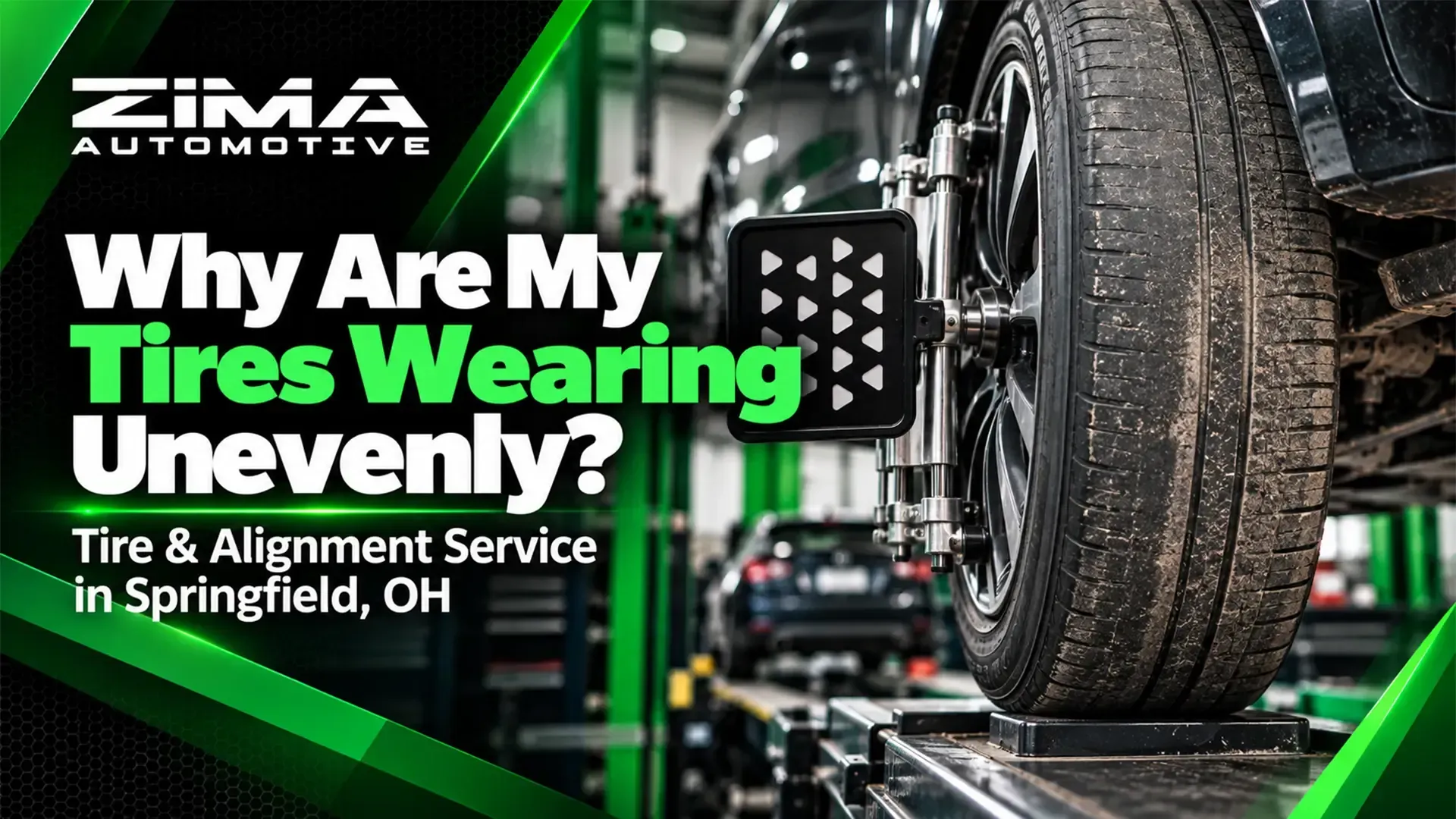
Uneven tire wear occurs when the tread is losing depth faster in certain areas instead of wearing evenly across the tire. Common causes include incorrect tire pressure, poor alignment, missed rotations, wheel imbalance, and worn steering or suspension parts.
Our
alignment and tire wear inspection helps Springfield drivers identify the source before more usable tread is lost.
What Uneven Tire Wear Means
The location and shape of the wear provide clues about what is happening. Look across the full tread width on all four tires, but remember that a visual check cannot confirm the cause by itself.
Wear on One Edge
Wear along the inner or outer edge often points to an alignment angle that is outside the vehicle's specification. A worn suspension part can also let the wheel tilt or move, so an alignment reading should be paired with a component check when needed.
Wear in the Center or on Both Shoulders
Center wear can develop when a tire is routinely overinflated, while wear on both shoulders often suggests underinflation. Check pressure when the tires are cold and use the specification on the driver's door label, not the maximum pressure printed on the tire.
Cupping or Scalloping
Cupping looks like alternating high and low spots around the tread. It may develop when a wheel is out of balance or a suspension part allows the tire to bounce. Our tire balancing service can address imbalance, but worn parts must be found before balance alone is treated as the answer.
Patchy or Flat-Spot Wear
Patchy wear can come from imbalance, damaged components, or inconsistent contact with the road. A distinct flat spot may follow hard braking or a period when the vehicle sat without moving. Tire damage and braking concerns should be inspected instead of judged from appearance alone.
Common Uneven Tire Wear Causes
Uneven tire wear causes often overlap, which is why one symptom does not always identify one repair. Tire condition, pressure, alignment readings, wheel balance, and component wear all help narrow the diagnosis.
Wheel Alignment Is Off
Alignment controls how the wheels point and sit relative to the road. A pothole impact, curb strike, or gradual component wear can change those angles. Drivers seeking wheel alignment in Springfield, OH, may also notice pulling, a crooked steering wheel, or one-sided tread wear after winter freeze-thaw damage on Clark County roads.
Tire Pressure Is Incorrect
Incorrect pressure changes the part of the tread carrying the load. Ohio temperature swings can move pressure enough to matter, especially from a warm afternoon to a cold morning. Check all four tires regularly and inspect the tire if one keeps losing air.
Tire Rotation Was Delayed
Front and rear tires handle different steering, braking, and drive forces. Regular tire rotation and alignment checks help spread wear and reveal developing problems. Rotation cannot restore tread that is already gone, but it can support more even wear when the tires remain serviceable.
Wheels Are Out of Balance
An imbalanced tire and wheel assembly often creates vibration at certain speeds. Repeated miles on I-70 or US-40 can make that shake easier to notice. The extra movement may contribute to cupped or patchy wear over time.
Suspension or Steering Parts Are Worn
Worn tie rods, ball joints, bushings, shocks, or struts can let a wheel move beyond its intended path. That movement may alter alignment and load the tread unevenly. Our suspension and steering repair process checks the parts that affect tire position, ride control, and steering response.
When to Schedule Tire and Alignment Service
Schedule an inspection when tread depth differs across a tire, the vehicle pulls, the steering wheel sits off-center, or vibration appears at road speed. A recent pothole or curb impact is another good reason to check the vehicle, even if the change feels minor.
Do not wait on a tire with exposed cords, a bulge, separation, or rapid air loss. Ohio's tire equipment standards require at least one-sixteenth of an inch of tread and prohibit unsafe tire conditions. Uneven wear can reach that limit on one edge before the rest of the tread looks worn out.
How Our Inspection Finds the Cause
The right tire service in Springfield, OH, starts by measuring the symptom instead of assuming every wear pattern needs an alignment. At Zima Automotive, we compare the tires, driving complaint, and vehicle condition before recommending service.
Tread and Pressure Check
We check tread depth across each tire, look for damage, and compare cold pressure with the vehicle specification. The wear pattern may show whether the concern is concentrated on one wheel, one axle, or all four tires.
Alignment, Balance, and Suspension Review
Alignment readings show whether wheel angles are within specification, while balancing checks weight distribution in each tire and wheel assembly. Steering and suspension checks help explain why an alignment changed or why it may not hold. These inspection considerations also apply to Audi repair in Springfield, OH, including tire and alignment care. Precise handling in some Audi models can make changes in the road feel easier to notice.
Takeaways
Uneven tread is a symptom, not a complete diagnosis. One-edge wear often suggests alignment or component trouble, pressure problems can wear out the center or shoulders, and cupping may involve balance or suspension movement.
Check tire pressure, compare tread across all four tires, and arrange an inspection when wear, pulling, or vibration appears. Early diagnosis may preserve remaining tread and help the vehicle track more predictably on Springfield and Clark County roads.
Frequently Asked Questions
Can uneven tire wear be fixed with an alignment?
An alignment can correct wheel angles that are causing new uneven wear, but it cannot replace tread already worn away. The tires and suspension should also be checked because damaged tires or loose parts may need attention first.
How often should I have my alignment checked?
Follow the vehicle and tire manufacturer's guidance and request a check when symptoms or impacts occur. Pulling, an off-center steering wheel, uneven wear, or a hard pothole strike can justify an alignment check before the next routine interval.
Can I keep driving on a tire with uneven wear?
You may be able to keep driving on a tire with uneven wear, depending on the remaining tread, damage, and underlying cause. Have the tire inspected promptly, and do not drive with exposed cords, a bulge, separation, or rapid pressure loss.
Why is only one front tire wearing unevenly?
One front tire may wear unevenly because its alignment angle, pressure, wheel balance, or nearby steering and suspension parts differ from the other side. Measuring tread and checking that corner of the vehicle can separate tire trouble from a mechanical cause.
Does tire rotation correct uneven wear?
Tire rotation can help distribute future wear, but it does not restore missing tread or correct a mechanical fault. The underlying pressure, alignment, balance, or component problem should be fixed before expecting a more even wear pattern.
Schedule Tire and Alignment Service in Springfield, OH
If your tread is wearing unevenly, contact Zima Automotive for a tire and alignment inspection based on the actual wear pattern. Call
(937) 342-3911 or visit us at
4800 Urbana Rd, Springfield, OH 45502 to schedule service for your vehicle.