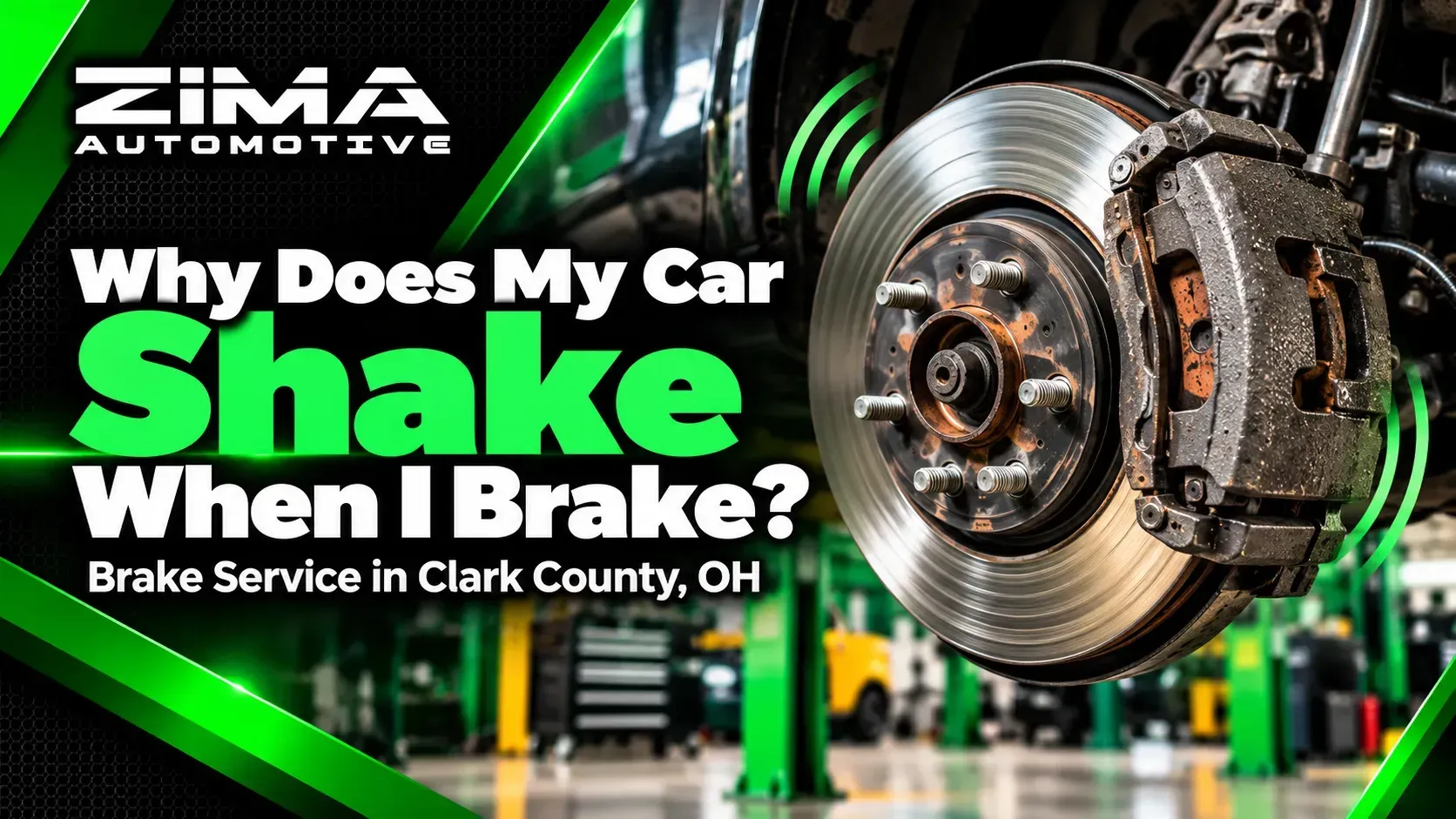
If your car shakes when braking, the brake system may not be applying friction evenly at each wheel. Uneven rotor surfaces are common, though a sticking caliper, worn steering part, or wheel issue can produce similar feedback. At Zima Automotive, our
brake repair team inspects for the cause first, helping drivers across Clark County, OH, understand what their vehicle needs.
Common Reasons a Car Shakes When Braking
Brake shaking usually starts when rotating parts no longer slow the vehicle smoothly. The exact cause depends on where you feel the movement and whether it appears only when you press the pedal.
Uneven Rotor Thickness or Friction Material
Small differences in rotor thickness or friction material can push the pads and caliper pistons back as the rotor turns. You may feel that movement as brake vibration when stopping, especially after slowing from higher speeds.
Drivers often call these “warped rotors,” though a rotor may have thickness variation, runout, heat spots, or uneven pad deposits instead. These brake rotor problems require measurements, since their symptoms can feel much alike from the driver’s seat.
A Sticking Caliper or Uneven Pad Contact
A sticking caliper can keep one pad in contact with the rotor and create excess heat. The vehicle may pull, smell hot, or develop uneven pad and rotor wear along with the shake.
Road salt and winter moisture can promote corrosion around brake hardware in Clark County. Repeated stops on Route 68 or US-40 can make heat-related symptoms easier to notice once a part stops moving freely.
What the Location and Timing of the Shake Can Reveal
Where and when you feel the shake gives a technician useful clues. It does not confirm a diagnosis, but it helps narrow the inspection.
Steering Wheel, Pedal, or Whole-Car Vibration
If the steering wheel shakes when braking, the front brakes or front suspension are usually the first areas to check. A pulsing pedal points toward changing brake force, while movement through the seat or floor may involve the rear brakes or another rotating part.
Hard braking can also activate the anti-lock braking system on slick pavement. That rapid pedal pulse may be normal during ABS operation, but a repeatable shake during routine dry-road stops is different.
Braking-Only Shaking Versus Speed-Related Vibration
A shake that appears only with pedal pressure is more likely to involve braking forces. A vibration that continues while cruising may instead involve tires, wheels, or the driveline.
For example, a tremor that grows with speed on I-70 may call for wheel balancing and vibration testing rather than a brake-only repair. Tracking the speed, pedal pressure, and road conditions helps separate overlapping symptoms.
Other Parts That Can Add to Brake Shaking
Worn steering or suspension parts can make a brake-related shake feel stronger. Loose tie rods, worn ball joints, damaged bushings, or wheel-bearing play can let the wheel move when braking shifts weight forward.
Clark County potholes and freeze-thaw pavement can add stress to these parts. When the car also clunks, wanders, or wears tires unevenly, our suspension and steering repair team can check the front end alongside the brakes.
Vehicle design and service procedures matter as well. Our Chevrolet auto repair work includes brake concerns such as noise, vibration, pulling, and reduced stopping power. We use the vehicle’s specifications rather than assuming every model needs the same repair.
When Brake Shaking Needs Prompt Attention
Brake shaking needs prompt attention when stopping feels less controlled or the symptom is getting worse. Stop driving and arrange safe transport if the pedal sinks, braking power drops, or the car pulls sharply. Do the same if a wheel becomes very hot or warning lights appear with poor braking.
Ohio requires vehicle brakes to remain in good working order and operate as equally as practicable across opposite wheels. The state’s brake equipment requirements reinforce why a change in stopping control should not be treated as a comfort issue alone.
How a Brake Inspection Finds the Cause
A brake inspection finds the cause by comparing the symptom with measured component condition. Our technicians can road-test the vehicle when appropriate, inspect pads and hardware, check caliper movement, and measure rotor thickness and runout.
We also look for heat damage, corrosion, loose parts, tire concerns, and steering or suspension play. At Zima Automotive in Springfield, OH, we explain the findings and recommend work based on the vehicle’s condition. Resurfacing may be possible on some rotors that remain within specification, while other rotors need replacement.
Takeaways
A car that shakes while braking may have uneven rotor thickness, friction deposits, caliper trouble, or wear elsewhere in the front end. The location and timing of the vibration help guide testing, but measurements are needed before choosing parts.
Clark County road salt, moisture, potholes, and frequent braking can add to wear. Schedule an inspection when the shake repeats, worsens, or comes with pulling, heat, noise, warning lights, or reduced stopping control.
Frequently Asked Questions
Is it safe to drive when my car shakes during braking?
Not when the shake is strong, worsening, or paired with reduced braking control. Stop and arrange a tow if the pedal sinks, the vehicle pulls sharply, a wheel smells hot, or braking power drops.
Do shaking brakes always mean the rotors are warped?
No, shaking brakes do not always mean the rotors are warped. Rotor thickness variation, uneven friction deposits, a sticking caliper, wheel issues, or worn steering and suspension parts can create similar symptoms.
Why does my steering wheel shake more at higher braking speeds?
The shake may feel stronger because higher wheel speed makes uneven braking forces repeat more quickly. Front rotor variation or looseness in steering and suspension parts can make that movement easier to feel through the wheel.
Can worn brake pads make my car shake?
Yes, worn or unevenly contacting brake pads can contribute to shaking. The pads may also be reacting to a damaged rotor, sticking caliper, or corroded hardware, so the full assembly should be checked.
How soon should I schedule a brake inspection?
Schedule a brake inspection soon when the vibration repeats during normal stops. Seek help immediately if the shaking comes with poor stopping power, a low pedal, severe pulling, smoke, heat, or a brake warning light.
Schedule Brake Service for a Shaking Car in Clark County
Repeated brake shaking calls for a measured inspection before more heat or wear affects nearby parts. Contact Zima Automotive at (937) 342-3911 to schedule a brake check for your car, truck, or SUV.
Our shop is located at
4800 Urbana Rd, Springfield, OH 45502, with access for drivers from Springfield, Mechanicsburg, Enon, and nearby Clark County communities. We will inspect the symptom, explain what we find, and help you plan the appropriate repair.